Little Falls, Minnesota: A Mississippi River Town
Strip away the guidebook categories and one thing holds the town together: the river. It named the place, powered it, floated its fortune downstream, and still runs through the middle of everything.
Every town has an organizing fact. In Little Falls it is the Mississippi. You can see it from the parks, hear it at the dam, and trace it through the history of nearly everything the town has built. To understand Little Falls, follow the water.
A name written by the river
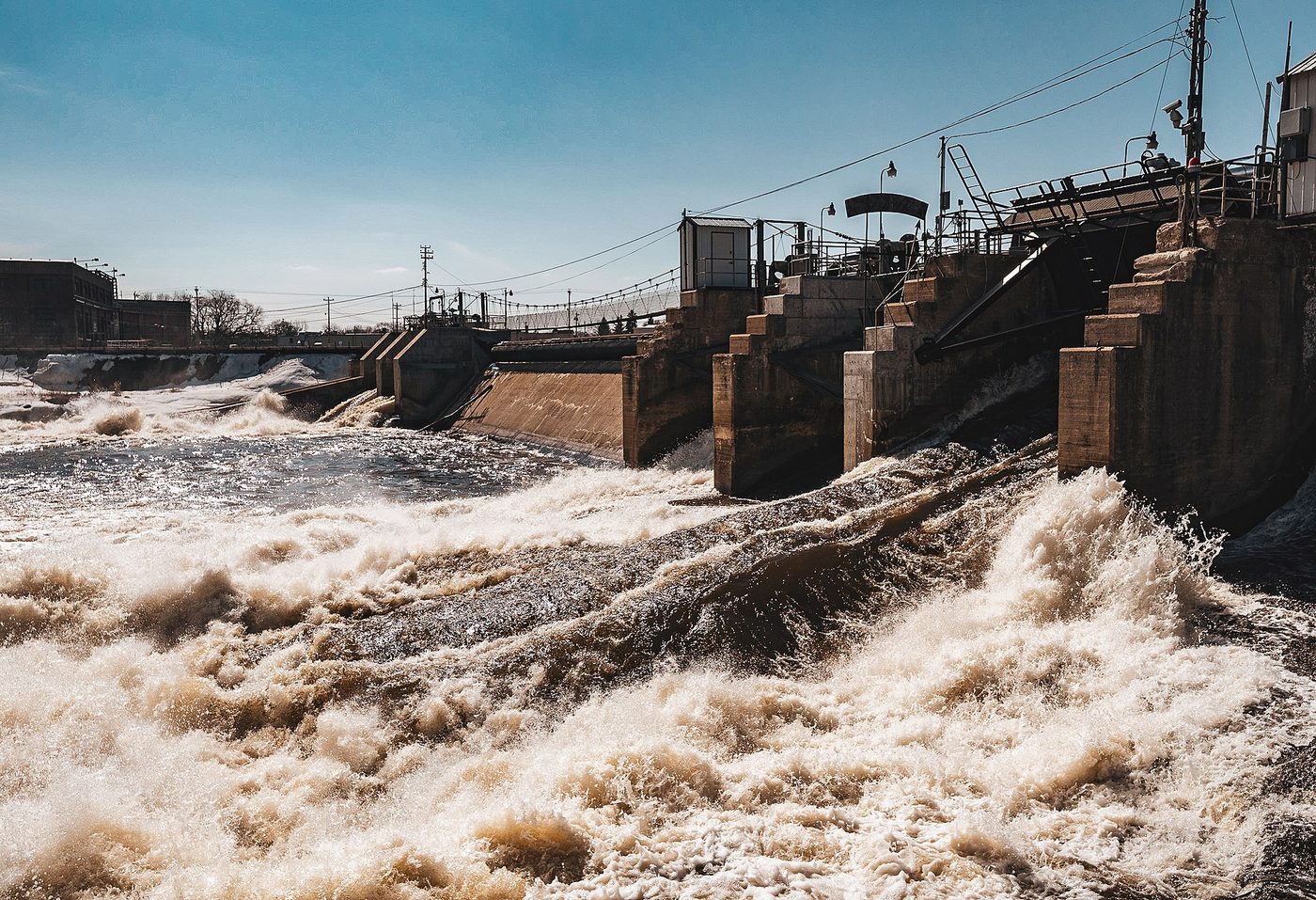
The town is named for a sound that no longer exists. Where the Mississippi once dropped over a ledge of slate and granite, there was a run of rapids — the "little falls." The Ojibwe called the spot Kakabikans; Zebulon Pike, passing in 1805, logged "a remarkable rapid in the river." The rapids are gone now, quieted beneath the pool of the dam, but the name stuck, a small monument to a landform the town replaced with a better one.
The river as engine
Little Falls did not grow by accident. Falling water is power, and power draws industry. The first sawmill went up in 1849 to feed the building of Fort Ripley; when the railroad arrived and the Pine Tree Lumber Company opened in the 1890s, the river became a working conveyor belt — logs floated down from the northern pineries, held in the dam's boom, sorted, and sawed. For a generation the Mississippi carried the town's entire economy on its back. Charles Weyerhaeuser and Drew Musser turned that timber into fortunes, and into the riverside mansions that still stand at Linden Hill.
Where the river made a person
The river shaped people, too. On a farm on the west bank south of town, a boy spent his boyhood summers fishing, roaming, and taking machines apart. Charles Lindbergh would go on to fly the Atlantic alone, but he came from this ground, and he said so — returning late in life to walk the property and record what he remembered. His boyhood home and the state park beside it sit right on the river that raised him.
What the town kept
Lumber towns usually fade when the trees run out. Little Falls did not, and the reason is partly architectural and partly stubborn. The county seat kept its courthouse and its downtown, now a National Historic District, and the old railroad depot — designed early in the career of Cass Gilbert, before the state capitol and the Supreme Court made him famous — still stands. The dam that once corralled logs was retooled to make electricity, which it has done for well over a century. The town found new work for its old bones instead of tearing them down.
A river you can still meet
The best thing about Little Falls is that none of this is behind glass. The Mississippi is right there. You can walk it at Maple Island Park, with the 1888 dam in full view, and hike its banks in the state park. Twice a year the town throws the river a party — the Dam Festival in June, fireworks reflecting off the water, and the Arts & Crafts Fair that fills the downtown streets after Labor Day.
The through-line
Central Minnesota has plenty of pleasant towns. What gives Little Falls its particular character is coherence: the history, the parks, the museums, the architecture, and the events all trace back to the same river. It is not a town that happens to sit beside the Mississippi. It is a town the Mississippi made — and, unusually, one that still lets you see how.
Start anywhere and the water leads you around: the history, the things to do, or the full Little Falls guide.

Michael Paycer
Michael Paycer grew up in Little Falls, Minnesota. Today he is a Senior SQL Server Database Administrator Consultant based in Saint Cloud, and he keeps this Little Falls guide as a personal project about his hometown.
Sources & further reading
- City of Little Falls — City History
- Wikipedia — Little Falls, Minnesota
- Minnesota Historical Society — Charles Lindbergh House
- Visit Little Falls — Little Falls Chamber & Tourism
External sites are provided for reference. Event dates, hours, and admission change annually — confirm current details with the official source before visiting.