The Mississippi River and the Little Falls Dam
The rapids gave the town its name; the dam gave it power. How a stretch of the Upper Mississippi built a milling economy and has generated electricity for more than a century.
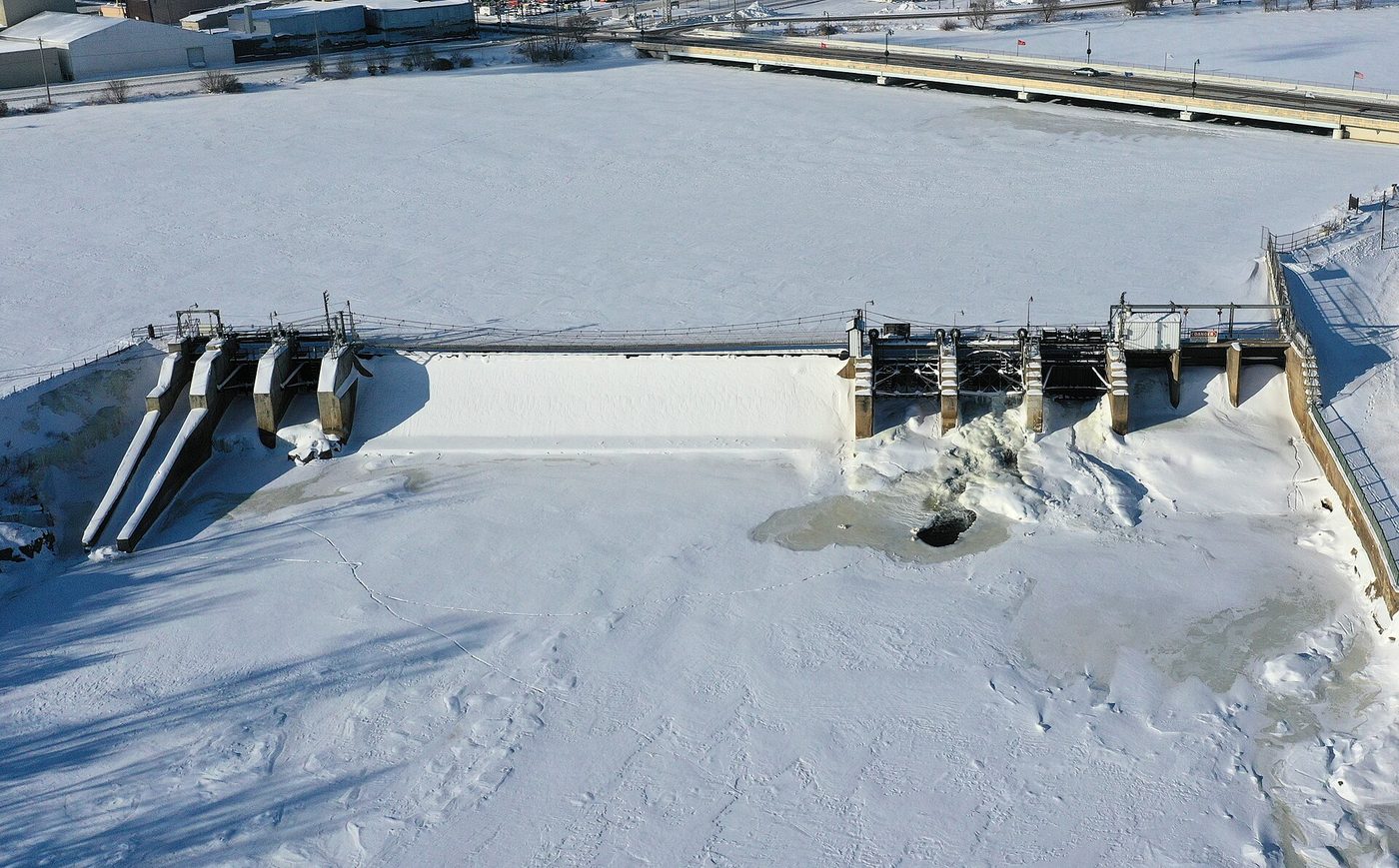
The hydroelectric dam that stands in Little Falls today was built in 1887–1888, replacing an earlier sawmill dam from 1849. It was converted to generate electricity in the 1890s, Minnesota Power acquired it in 1923, and it still produces hydroelectric power on the Mississippi River.
Why the town is here at all
Rivers decide where towns go, and the Mississippi decided Little Falls. At this point the river dropped over a rock ledge into a run of rapids — the "little falls" itself. Falling water is usable water: it turns wheels, drives saws, and, later, spins turbines. Every early plan for the town started from that single fact.
The first attempt came in 1849, when James Green built a dam and a sawmill to supply lumber for the construction of Fort Ripley upriver, and the Little Falls Mill and Land Company formed to develop the water power. That dam did not survive the decade — it washed out in the 1850s — and the first boom went with it. The idea, though, was sound, and it came back.
The 1888 dam
The structure that defines the riverfront today was built in 1887 and 1888. Its first job was industrial: the pool it created upstream formed the boom where the Pine Tree Lumber Company stored and sorted the logs floated down from the northern pineries. Hold the logs, sort them, feed the mill — the dam made the whole operation possible.
In the 1890s the dam took on a second life. As electric power spread, the falling water that had run sawmills was harnessed to generate electricity instead, and the site was converted to hydropower. It has been making electricity ever since.
| Built | 1887–1888 (replacing an 1849 sawmill dam) |
|---|---|
| River | Mississippi River, Morrison County, Minnesota |
| Converted to hydropower | 1890s |
| Head | About 23 feet |
| Generating capacity | Roughly 4.9 megawatts |
| Operator | Minnesota Power, which acquired the station in 1923 |
The technical particulars are modest by modern standards — a head of about 23 feet and a generating capacity near 4.9 megawatts — but longevity is the point. When Minnesota Power & Light consolidated a group of regional utilities in 1923, the Little Falls water-power operation came with it, and the company has run the station since. A dam that has produced power across three centuries of use is a rare thing.
Fact versus story
Two details are worth keeping straight, because they blur in casual retellings. First, the dam you see is not the 1849 original; that early structure failed, and the current dam dates to 1887–1888. Second, the operator is Minnesota Power, not one of the larger utilities people sometimes assume. The rest — that the falls named the town, that the dam's pool served the lumber mills, that it was later converted to hydropower — is well documented.
Seeing the river today
The best public vantage on the dam is Maple Island Park, on the Little Falls riverfront, where walking paths run alongside the water within sight of the 1888 structure. The park is also where the town throws its summer party, the Dam Festival, complete with fireworks over the Mississippi. Downstream and up, the river threads through Charles A. Lindbergh State Park and the wider Morrison County landscape, still the organizing line of the whole area.
For how all of this began, read The History of Little Falls; for the river town's character today, see Little Falls: A Mississippi River Town.

Michael Paycer
Michael Paycer grew up in Little Falls, Minnesota. Today he is a Senior SQL Server Database Administrator Consultant based in Saint Cloud, and he keeps this Little Falls guide as a personal project about his hometown.
Sources & further reading
- Wikipedia — Little Falls Dam
- Minnesota Power — Hometown Hydropower: History
- John Weeks — Little Falls Dam, Mississippi River
- St. Cloud Perspective — History and function of Morrison County dams
- Visit Little Falls — Maple Island Park
External sites are provided for reference. Event dates, hours, and admission change annually — confirm current details with the official source before visiting.