Charles A. Lindbergh State Park: Complete Guide
Nearly 570 acres on the edge of town where Pike Creek meets the Mississippi — seven miles of trails, a campground, and stone-and-log shelters built during the Depression.
It is a Minnesota state park of about 570 acres on the southern edge of Little Falls, next to the Lindbergh boyhood home. Pike Creek runs through it to the Mississippi, and it offers roughly seven miles of trails, 38 campsites, and 1930s Rustic-style stone-and-log buildings.
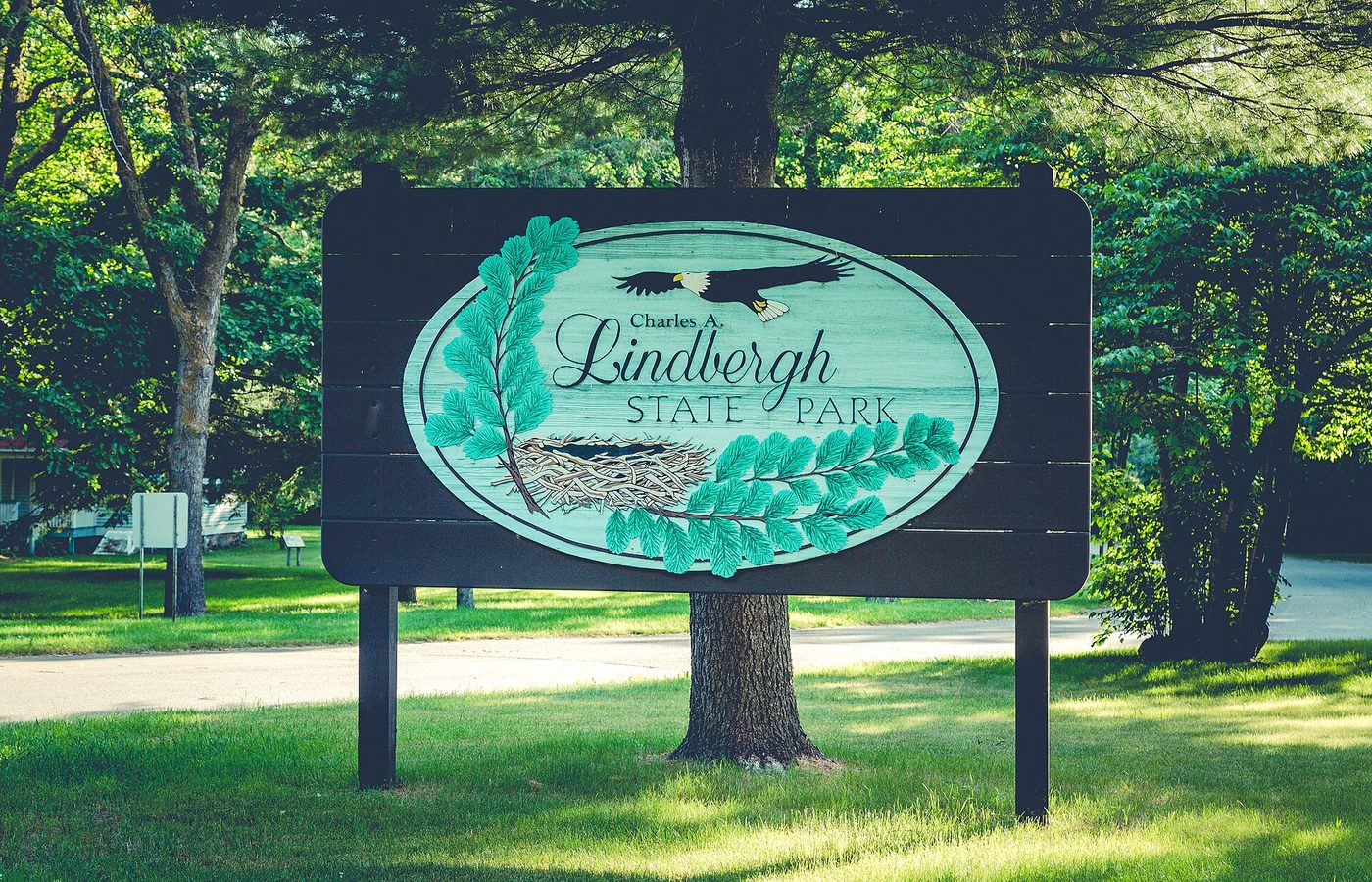
How the park came to be
The park shares its origin with the historic home beside it. When the Lindbergh family gave 110 acres to the State of Minnesota in 1931, in honor of the aviator's father, it seeded what became Charles A. Lindbergh State Park — named for the elder Charles A. Lindbergh, the lawyer and congressman, not only for his famous son. It is one of the older parks in the Minnesota system, and it wears that age well.
The land: Pike Creek and the river
The park's defining feature is water. Pike Creek runs through the center of the park and empties into the Mississippi, and the trails are built to follow it. In the creek bed, under the trail bridge, you can see boulders that are fragments of the Thomson formation — a small geology lesson hiding in plain sight. Overhead, the river corridor draws eagles, hawks, and owls, which are a regular sight for anyone paying attention.
Trails
The park offers about seven miles of trails. The main loop circles the park's perimeter through hardwood forest and along Pike Creek — an unhurried walk rather than a workout. A separate Little Elk Unit, roughly three and a half miles north of the main entrance, adds about two more miles of looping trail leading to the point where the Little Elk River joins the Mississippi. In winter the trails serve cross-country skiers.
Camping and facilities
| Size | About 570 acres |
|---|---|
| Trails | Roughly 7 miles, plus the Little Elk Unit (~2 miles) |
| Camping | 38 campsites (15 with electric hookups), plus a canoe/backpack site |
| Water | Pike Creek (canoeable) flowing to the Mississippi River |
| Historic structures | 1930s Rustic-style picnic shelter and water tower, in local stone and logs |
| Wildlife | Eagles, hawks, owls; hardwood forest along the creek |
The campground has 38 sites, 15 of them with electric hookups, plus a canoe-in / backpack site for anyone wanting a quieter night. Picnic grounds sit near the creek. Paddlers can put in on Pike Creek; anglers work both the creek and the river.
The Depression-era architecture
Two of the park's buildings — a picnic shelter and a water tower — were built in the 1930s in the National Park Service Rustic style, using local stone and logs, by New Deal work crews. They have stood largely unchanged since, and they are worth a look in their own right: heavy, hand-built, and clearly made to last. They tie the park to a specific chapter of American history, the same era that shaped many of Minnesota's state parks.
Minnesota state parks require a vehicle permit, sold by the day or as an annual pass. Trail conditions, campground reservations, and seasonal hours are handled by the Minnesota DNR — check the DNR park page for current information and to reserve a site.
Pair it with the house
The state park and the Lindbergh boyhood home sit on the same ground, so history and hiking come as a set: tour the house, then walk the trails the aviator knew as a boy. Both are minutes from downtown — see the full things to do in Little Falls to build out the day, or the parks guide for the town's other green spaces.

Michael Paycer
Michael Paycer grew up in Little Falls, Minnesota. Today he is a Senior SQL Server Database Administrator Consultant based in Saint Cloud, and he keeps this Little Falls guide as a personal project about his hometown.
Sources & further reading
- Minnesota DNR — Charles A. Lindbergh State Park
- Wikipedia — Charles A. Lindbergh State Park
- Explore Minnesota — Charles A. Lindbergh State Park
- Parks & Trails Council of Minnesota — Charles A. Lindbergh
External sites are provided for reference. Event dates, hours, and admission change annually — confirm current details with the official source before visiting.